

Figure integrity
Check figure provenance before judging an image-integrity concern
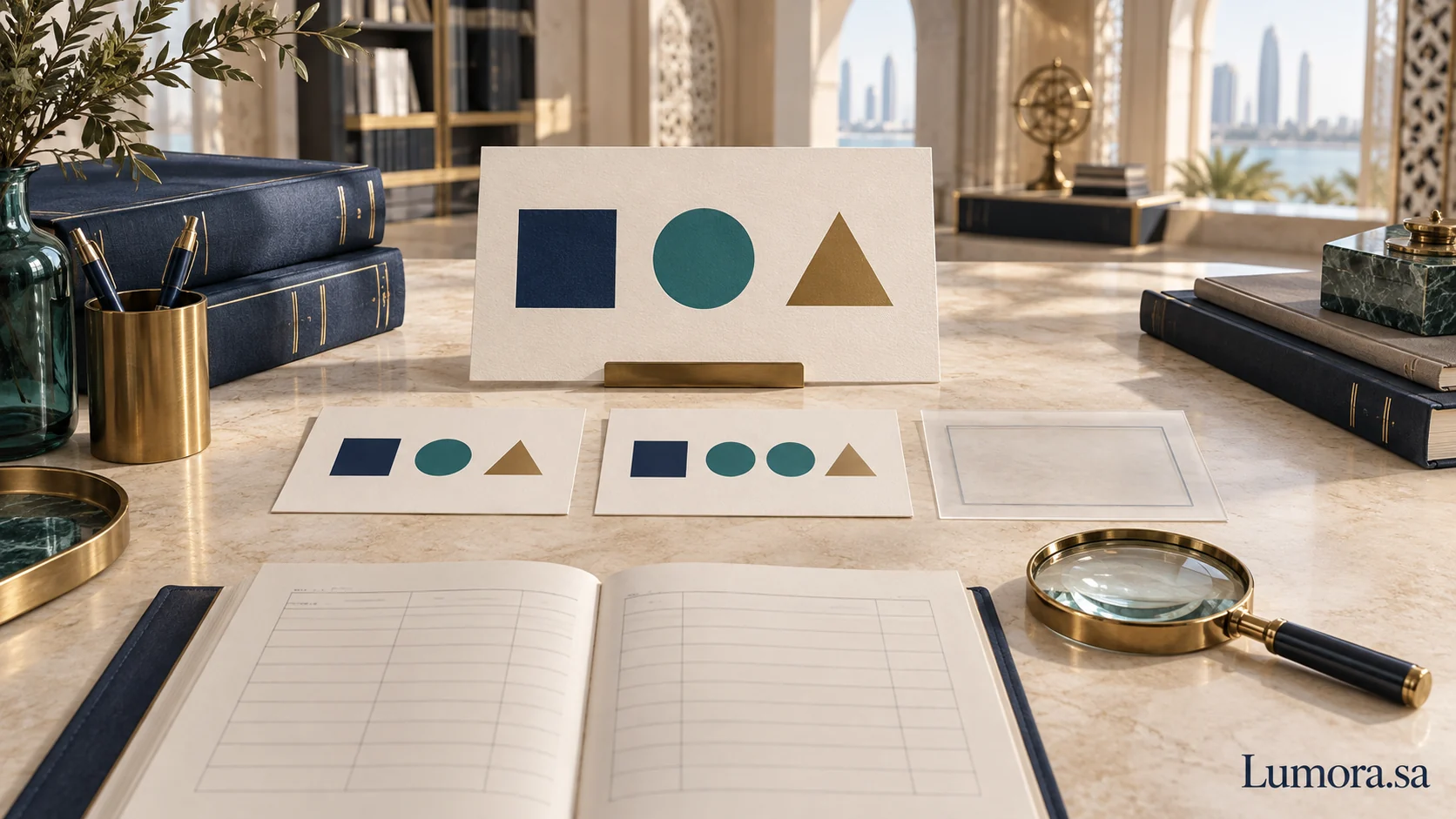
A suspicious-looking region is a question to investigate, not a complete explanation of how an image was made. Begin with the submitted figure, the source material and the transformations linking them. This guide uses an invented geometric teaching panel containing shapes, not experimental or clinical data. The AI-generated header illustration explains this fictional example; it contains no research data. This guide does not authenticate a real image or determine misconduct.
The working sequence
- Preserve the submitted file
- Trace originals and transformations
- Investigate the specific discrepancy
- Document the editorial disposition
1. Identify what the image is supposed to represent
First distinguish a measured image, a diagram, a chart derived from data and a decorative illustration. Ask what claim the figure supports and which materials would allow that claim to be checked. A decorative drawing and a micrograph need different provenance, even if both arrive as PNG files.
Record the panel labels, figure number and exact submitted version before examining it. If a concern involves one region, identify the region without altering the only available copy. Work on a separate inspection copy and retain the original bytes. A checksum can help establish which file was examined; it cannot tell whether the depicted science is true.
2. Read the applicable figure policy before classifying an edit
PLOS One’s figure guidance prohibits changes that misrepresent scientific information, including repeated or erased features and undeclared composites. Original uncropped, minimally adjusted blot and gel images need not accompany initial submission, but are required during peer review or before acceptance. These are PLOS requirements; check the actual target journal’s rules.
Use the policy to frame a precise question, then compare the relevant source and derivative. A size check or a clean automated report cannot substitute for that comparison. Conversely, a formatting problem does not establish a fabricated experiment. Keep technical suitability, traceability and scientific interpretation as separate parts of the assessment.
Reference: PLOS One: figures and original image requirements
3. Build a source-to-derivative record
The fictional teaching source G01 contains a square, a circle and a triangle drawn solely to explain provenance. Its derivatives below are described in text; they are not images from a study. Each record identifies the source, intended operation, available evidence and next check. The example does not propose making an empirical figure from generated shapes.
G01-A is a recorded resize. G01-B contains an unexplained repeated circle. G01-C is an exported panel whose claimed source file is missing. These states require different actions: compare a documented transformation, request an explanation for a discrepancy, and recover missing provenance. None supports a conclusion about a researcher’s intent.
On small screens, scroll the table horizontally, or focus it and use the arrow keys.
| Derivative | Claimed operation | Evidence available | Appropriate next check |
|---|---|---|---|
| G01-A | Resize G01 for layout | G01 and resize settings retained | Compare shape count, labels and visible content |
| G01-B | Export G01 | G01 retained; repeated circle unexplained | Ask for the editing history and intermediate file |
| G01-C | Export another teaching panel | Claimed source not supplied | Request the source; keep provenance unresolved |
4. Record what an AI-assisted tool actually changed
For an AI-assisted workflow, ask the operator to identify the tool and version where available, input file, settings or instructions, output file and manual changes. Describe the operation in ordinary terms: changing a caption, isolating a background, generating a new illustration or modifying image content are different activities. “Enhanced with AI” is too broad to reconstruct any of them.
In the G01 exercise, suppose an editor reports that an automatic cleanup step produced G01-B. That explanation suggests a transformation to examine; it does not establish that the extra circle is harmless or that the tool necessarily caused it. Compare the input and saved output and ask what was accepted manually. Do not reconstruct a missing scientific original by generating a plausible replacement.
5. Ask a question that the source material can answer
A useful query identifies the exact submitted figure and region, describes the observed difference and requests the original or intermediate file needed to examine it. For G01-B, ask why the derivative has a second circle when the retained source has one. Avoid a general demand to “prove authenticity” without saying what evidence would resolve the concern.
Keep the inquiry and any response within the authorised editorial channel. Do not upload confidential submissions or source images to an external comparison service without the permissions and arrangements that apply. If a screening tool was used, record its version, settings and output as supporting observations; retain the human comparison and its limitations separately.
6. Close each concern with its own evidence and limitation
After inspection in the fictional exercise, G01-A could be recorded as matching the documented resize if that comparison were actually performed. G01-B stays unexplained until the response and files are assessed. G01-C remains untraceable while the source is missing. Do not turn these hypothetical outcomes into a single certificate saying that every image passed.
For a real submission, the responsible editor applies the journal’s process to decide whether clarification, replacement, further investigation or another action is needed. Record who decided, which files were considered and what remains unknown. A correction of an accidental layout error and a substantiated integrity finding are different outcomes; the evidence should explain which conclusion is supported.
Questions for a practical final check
- Identify the image’s purpose and exact submitted version.
- Retain originals and work on inspection copies.
- Check the target journal’s image policy.
- Record each transformation, including AI-assisted steps.
- Ask a specific question about the discrepancy.
- Keep unresolved provenance distinct from a misconduct finding.
Examples illustrate a working method; they do not establish the readiness of a particular journal or manuscript. This is general guidance: check the current policies of the journal concerned. Source links reviewed 15 September 2026.